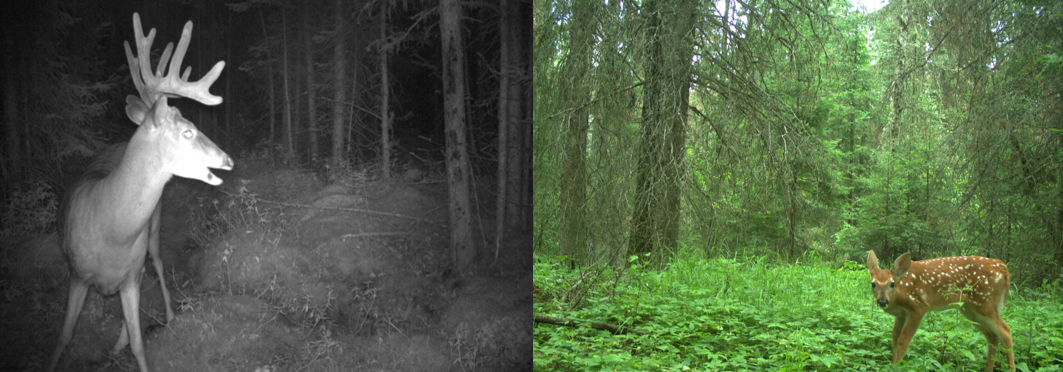
White-tailed Deer Invasion
The invasion of White-tailed deer has long captured the interest of researchers working in Alberta’s boreal forest landscape, and I’ve recently become keenly interested in the relative role of habitat disturbance and climate on their expansion. Changing environmental conditions in northern Alberta are increasing habitat suitability for white-tailed deer, which serve as a prey base for many predator species, which ultimately impacts almost everyone else in the ecosystem! My collaborators and I are working to understand the specific drivers of white-tailed deer populations, and build predictive simulations of their expansion under projected disturbance and climate scenarios
Is it Climate or Habitat Alteration? Probably Both.
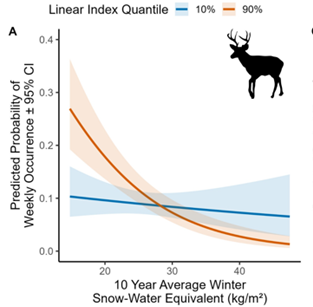
I’ve become fascinated by the debate in the literature on whether the driving force behind white-tailed deer expansion is climate change or habitat alteration. Climate change generally leads to warmer winters, which increases deer survival in harsh northern climates. But habitat alteration opens up dense forest to provide foraging opportunities for deer.
I am using camera traps across the boreal forest in Alberta to document when and where deer occur, and relate those to climate and habitat alteration variables. This work is on-going, but the short answer is it’s probably a combination of both climate and alteration!
Deer don’t drive all predators!
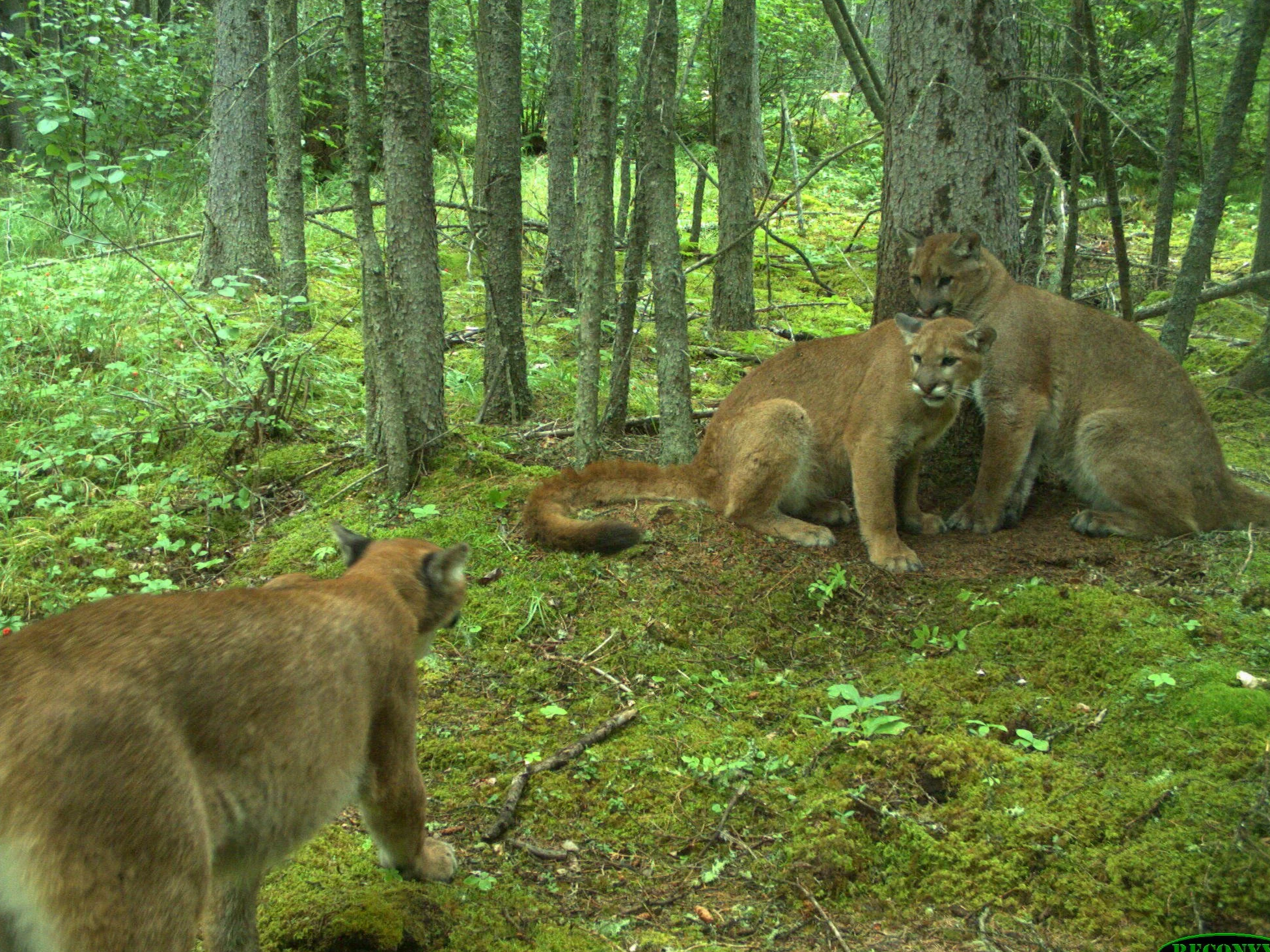
One of our first investigations into white-tailed deer as drivers of predators came from the undergraduate work of Millicent Gaston, who noted an unusually high number of cougar detections in one of our landscapes. We originally thought expanding white-tailed deer populations could be a large prey base providing resources for cougars, but we found it was actually native prey species like Moose and Snowshoe hares!
We are continuing to work on identifying the relative strength of interactions between deer and predators, while recognizing that not all predator-prey relationships are equal!