Publications
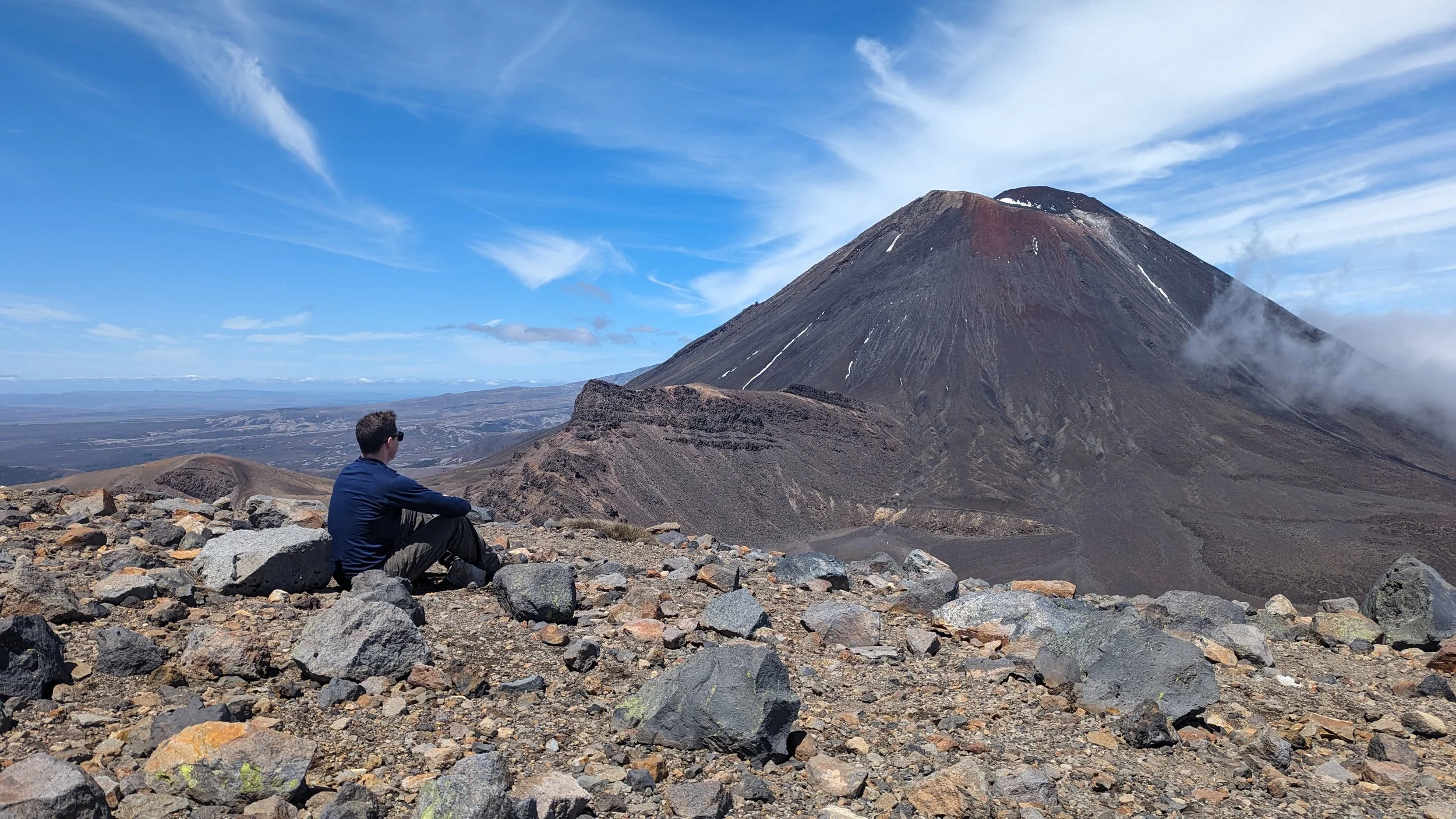
I visited Mount Ngauruhoe in New Zealand in 2024, the prominent volcano stand in for “Mount Doom” in The Lord of The Rings movies. The feat of climbing that mountain seems like a nice analogy for the publish-or-perish model of modern science.
I am currently in the process of adding a plain language summary and photo abstract to each published paper, so please bear with me until the list is complete! For the plain old boring list, see my Google Scholar or ORCID pages.
If you cannot access any of the papers below, please feel free to email me and I will send a PDF.
Updated January 28th 2026.
2026
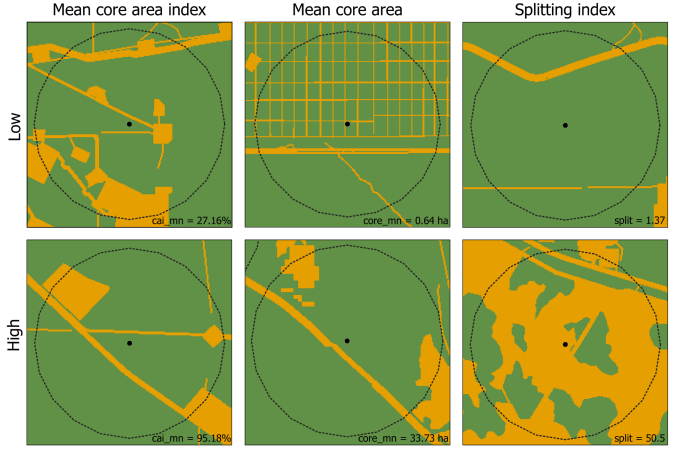
[29] Smith, R.M., Shackelford, N., Barnas, A.F., and J.T. Fisher. 2025. Beyond habitat loss: How landscape configuration drives mammal distributions across petroleum extraction landscapes. Journal of Applied Ecology. e70232. Paper here.
Summary: The amount of human development impacts wildlife, but an often overlooked aspect is the arrangement or configuration of those development features. We looked at seven large mammals species in the oil sands, and showed composition (amount) is most important for lynx and white-tailed deer, but configuration was most important for fishers, coyotes, and wolves. This is the first paper out of Rebecca Smith’s thesis work!
2025
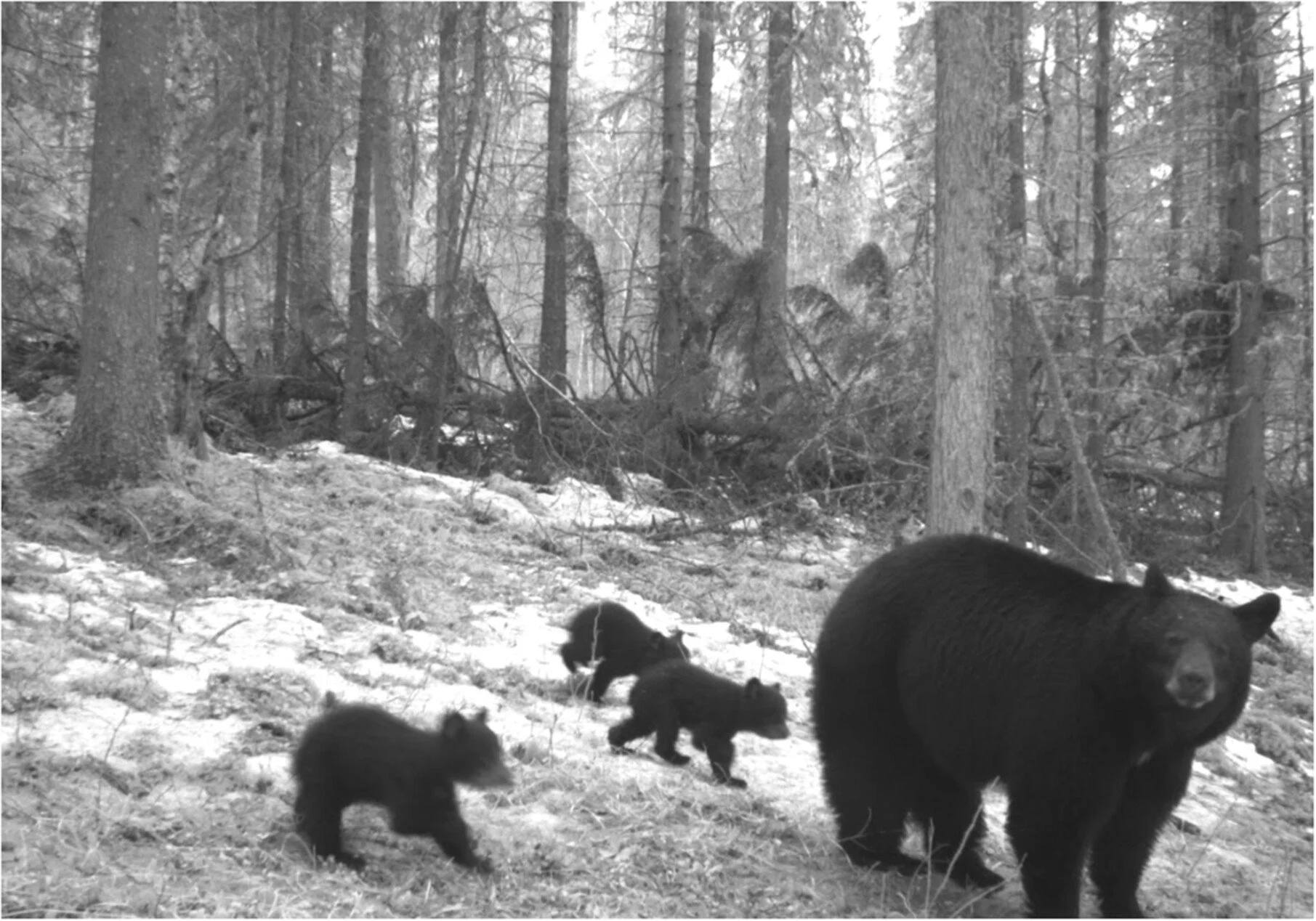
[28] Barnas, A.F., and J.T. Fisher. 2025. Will using artificial intelligence to review camera trap images reduce human connection to wildlife research? Wildlife Society Bulletin. 49(2). e1588. Paper here.
Summary: Artificial Intelligence has great promise to speed up the processing of remotely sensed imagery, but I am increasingly worried about the loss of experience by outsourcing image review to technology. This opinion piece explores the implications of relying too heavily on AI for data processing, and was great fun to write.
2024
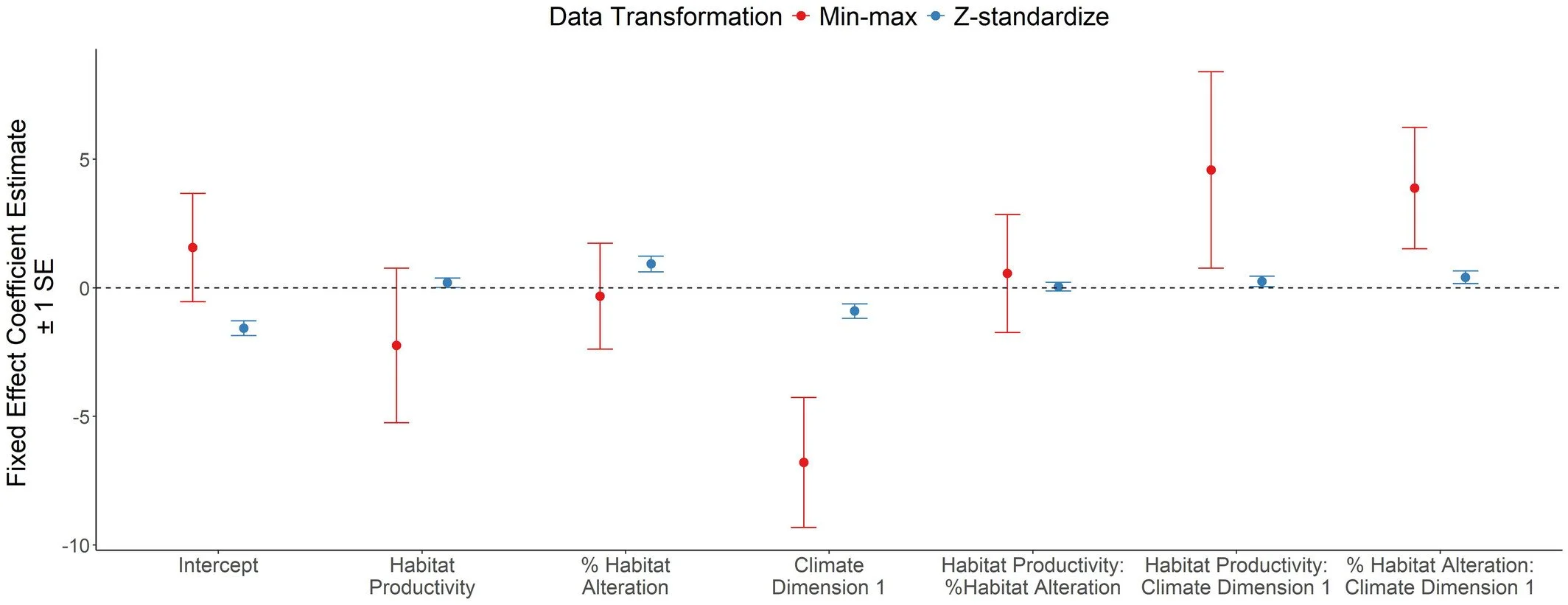
[27] Barnas, A., Anholt, B., Burton, A.C., Carroll, K., Côté, S.D., Festa-Bianchet, M., Murray, D., Leblond, M., Mumma, M., Newmaster, S.G., et al. 2024. The influence of habitat alteration on density of invading white‐tailed deer should not be discounted. Global Change Biology. 30(9): e17498. Paper here.
Summary: Different data transformations can seriously change the interpretation of beta coefficients and resulting inferences. In a response to Dickie et al 2024, I explored the role of their data transformation, and showed opposing, but similar sized effects of climate and habitat alteration on white-tailed deer populations.
[26] Ethier, C.A., Barnas, A.F., Boucher, N.P., Baillie‐David, K., Fisher, J.T. 2024. Lethal wolf control elicits change in moose habitat selection in unexpected ways. The Journal of Wildlife Management. 88(7): e22620
https://wildlife.onlinelibrary.wiley.com/doi/10.1002/jwmg.22620
[25] Gaston, M.V., Barnas, A.F., Smith, R.M., Murray, S., Fisher, J.T. 2024. Native prey, not landscape change or novel prey, drive cougar (Puma concolor) distribution at a boreal forest range edge. Ecology and Evolution. 14(4): e11146
https://onlinelibrary.wiley.com/doi/10.1002/ece3.11146
[24] Barnas, A.F., Ladle, A., Burgar, J.M., Burton, A.C., Boyce, M.S., Eliuk, L., Grey, F., Heim, N., Newmaster, S.G. 2024. How landscape traits affect boreal mammal responses to anthropogenic disturbance. Science of the Total Environment. 915: 169285
https://www.sciencedirect.com/science/article/pii/S0048969724014364
[23] Barnas, A.F., Simone, C.A.B., Geldart, E.A., Love, O.P., Jagielski, P.M., Gilchrist, H.G., Hennin, H.L., Richardson, E.S., Dey, C.J., Semeniuk, C.A.D. 2024. An interspecific foraging association with polar bears increases foraging opportunities for avian predators in a declining Arctic seabird colony. Ecology and Evolution. 14(3): e11012
https://onlinelibrary.wiley.com/doi/10.1002/ece3.11012
2023
[22] Geldart, E.A., Love, O.P., Barnas, A.F., Harris, C.M., Gilchrist, H.G., Semeniuk, C.A.D. 2023. A colonial-nesting seabird shows limited heart rate responses to natural variation in threats of polar bears. Royal Society Open Science. 10(10): 221108
https://royalsocietypublishing.org/doi/10.1098/rsos.221108
[21] Lenzi, J., Barnas, A.F., El Said, A.A., Desell, T., Rockwell, R.F., Ellis-Felege, S.N. 2023. Artificial intelligence for automated detection of large mammals creates path to upscale drone surveys. Scientific Reports. 13(1): 947
https://www.nature.com/articles/s41598-023-27841-8
[20] Geldart, E.A., Love, O.P., Gilchrist, H.G., Barnas, A.F., Harris, C.M., Semeniuk, C.A.D. 2023. Heightened heart rate but similar flight responses to evolved versus recent predators in an Arctic seabird. Avian Conservation & Ecology. 18(1): 22 https://ace-eco.org/vol18/iss1/art22/
2022
[19] Barnas, A.F., Geldart, E.A., Love, O., Jagielski, P.M., Harris, C., Gilchrist, G., Hennin, H.L., Richardson, E.S., Dey, C.J., and C.A.D. Semeniuk. 2022. Predatory cue use in flush responses of a colonial nesting seabird during polar bear foraging. Animal Behaviour. 193: 75-90 www.sciencedirect.com/science/article/abs/pii/S0003347222002329
[18] Barnas, A.F., Darby, B.J., Iles, D.T., Koons, D.N., Rockwell, R.F., Semeniuk, C.A.D., and S.N. Ellis-Felege. 2022. Bear Presence attracts avian predators but does not impact lesser snow goose nest attendance. Journal of Avian Biology. 2022: e02840 onlinelibrary.wiley.com/doi/full/10.1111/jav.02840
[17] Geldart, E.A., Barnas, A.F., Semeniuk. C.A.D., Gilchrist, G., Harris, C.M., and O. Love. A colonial-nesting seabird shows no heart rate response to drone-based population surveys. Scientific Reports. 12 (1): 1-10 www.nature.com/articles/s41598-022-22492-7
[16] Jagielski, P.M., Barnas, A.F., Gilchrist, G., Richardson, E., Love, O., and C.A.D. Semeniuk. 2022. The utility of drones for studying polar bear behaviour in the Canadian Arctic: opportunities and recommendations. Drone Systems and Applications. 10 (1): 97-110 cdnsciencepub.com/doi/pdf/10.1139/dsa-2021-0018
[15] Clark, D., Barnas, A.F., Brook, R.K., Ellis-Felege, S.N., Fishback, L., Higdon, J.W., Manning, K., Rivet, D., Roth, J.D., Trim, T., Webb, M., Rockwell, R.F. 2022. The State of Knowledge About Grizzly Bears (Kakenokuskwe osow Muskwa (Cree), Ursus arctos) in Northern Manitoba. Arctic. 75 (1): 105-120 journalhosting.ucalgary.ca/index.php/arctic/article/view/74922
[14] Simone, C.A.B, Geldart, E.A., Semeniuk, C.A.D, Love, O., Gilchrist, G., and A.F. Barnas. Conspecific nest attendance behaviours of common eiders (Somateria mollissima) in response to polar bear (Ursus maritimus) foraging activity: error or intent? Canadian Field Naturalist. 136(3): 247-253 https://doi.org/10.22621/cfn.v136i3.2807
2021
[13] Ellis-Felege, S.N., Stechmann, T., Hervey, S., Felege, C., Rockwell, R.F., and A.F. Barnas. 2021. Nesting common eiders (Somateria mollissima) show little behavioral response to fixed-wing drone surveys. Journal of Unmanned Vehicle Systems. 10 (1): 1-14 cdnsciencepub.com/doi/pdf/10.1139/juvs-2021-0012
2020
[12] Barnas, A.F., Iles, D.T., Stechmann, T.J., Wampole, E.M., Koons, D.N., Rockwell, R.F., and S.N. Ellis-Felege. 2020. A phenological comparison of grizzly (Ursus arctos) and polar bears (Ursus maritimus) as waterfowl nest predators in Wapusk National Park. Polar Biology. 43: 457-465 https://link.springer.com/article/10.1007/s00300-020-02647-w
[11] Barnas, A.F., Chabot, D., Hodgson, A., Johnston, D.W., Bird, D.M., and S.N. Ellis-Felege. 2020. A standardized protocol for reporting methods when using drones for wildlife research. Journal of Unmanned Vehicle Systems . 8(2): 89- 98 https://doi.org/10.1139/juvs-2019-0011
2019
[10] Hervey, S.D., Barnas, A.F., Stechmann, T.J., Rockwell, R.F., Ellis-Felege, S.N. and B.J. Darby. 2019. Kin grouping is insufficient to explain the inclusive fitness gains of conspecific parasitism in the common eider. Molecular Ecology. 28: 4825- 4838 https://doi.org/10.1111/mec.15258
[9] Barnas, A.F., Darby, B.J., Vandeberg, G.S., Rockwell, R.F., and S.N. Ellis-Felege. 2019. A comparison of drone imagery and ground-based methods for estimating the extent of habitat destruction by lesser snow geese (Anser caerulescens caerulescens) in La Pérouse Bay. PLoS ONE. 14(8) https://doi.org/10.1371/journal.pone.0217049
[8] Bowley, C., Mattingly, M., Barnas, A.F., Ellis-Felege, S.N., and T. Desell. 2019. An analysis of altitude, citizen science and a convolutional neural network feedback loop on object detection in unmanned aerial systems. Journal of Computational Science. 34:102-116 https://doi.org/10.1016/j.jocs.2019.04.010
2018
[7] Bowley, C., Mattingly, M., Barnas, A.F., Ellis-Felege, S.N., and T. Desell. 2018. Detecting wildlife in unmanned aerial systems imagery using convolutional neural networks trained with an automated feedback loop. International Conference on Computational Science. 69-82 https://doi.org/10.1007/978-3-319-93698-7_6
[6] Barnas, A.F., Felege, C.J., Rockwell, R.F., and S.N. Ellis-Felege. 2018. A pilot(less) study on the use of an unmanned aircraft system for studying polar bears. Polar Biology. 41: 1055-1062 https://doi.org/10.1007/s00300-018-2270-0
[5] Barnas, A.F., Newman, R., Felege, C.J., Corcoran, M.P., Hervey, S.D., Stechmann, T.J., Rockwell, R.F., and S.N. Ellis-Felege. 2018. Evaluating behavioral responses of nesting lesser snow geese to unmanned aircraft surveys. Ecology and Evolution. 8: 1328-1338 https://doi.org/10.1002/ece3.3731
[4] Joo, S., Wang, MH, Lui, G., Lee, J., Barnas, A.F., Kim, E., Sudek, S., Worden, A.Z., and J.H. Lee. 2018. Common ancestry of heterodimerizing TALE homeobox transcription factors across Metazoa and Archaeplastida. BMC Biology 16:136 https://doi.org/10.1186/s12915-018-0605-5
2017
[3] Gormezano, L.J., Ellis-Felege, S., Iles, D.T., Barnas, A.F., and R.F. Rockwell. 2017. Polar bear foraging behavior during the ice-free period in western Hudson Bay: observations, origins, and potential significance. American Museum Novitates. 3885: 1-28 https://doi.org/10.1206/3885.1
[2] Bowley, C., Mattingly, M., Barnas, A.F., Ellis-Felege, S.N., and T. Desell. 2017. Toward using citizen scientists to drive automated ecological object detection in aerial imagery. IEEE 13th International Conference on e-Science. 99-108. https://doi.org/10.1109/eScience.2017.22
2016
[1] Mattingly, M., Barnas, A., Ellis-Felege, S.N., Newman, R., Iles, D.T., and T. Desell. 2016. Developing a citizen science web portal for manual and automated ecological image detection. IEEE 12th International Conference on e-Science. 223-232. https://doi.org/10.1109/eScience.2016.7870903