Predator Prey Interactions
Climate warming in the Arctic comes with all sorts of problems, but one of the biggest and most interesting is the loss of spring sea ice. Melting ice forces polar bears onto land earlier in the year, causing them to overlap with the nesting period of several nesting bird species. Unfortunately for these birds, polar bears can rapidly consume hundreds of eggs in a single foraging bout, causing mass reproductive failure in a short period of time. I began addressing the questions of how nesting birds respond to bears during grad school at the University of North Dakota, and was fortunate to work on a similar project at the University of Windsor with Dr. Christina Semeniuk for my first postdoctoral fellowship.
Bears can change nesting bird behaviour
Arctic nesting birds have a tough time as it is, keeping their eggs warm long enough to hatch. My initial interests in grad school when investigating bird behaviour was trying to understand how bear presence in nesting bird colonies would impact nest attendance. I was able to work on this problem in both Wapusk National Park (Manitoba) and East Bay Island (Nunavut) showing that bears had little effect on nesting snow geese, but caused large changes to nesting common eiders. This work was done using a combination of drones and camera traps, allowing insights to bird and bear behaviour that would be challenging and frightening to pursue in person.
A fun part of working on this project was learning that Eiders engaged in “nest betrayal” behaviour, temporarily sitting on neighbouring nests to lure the bear away from their own nest! Traitors.
Bears attract secondary predators
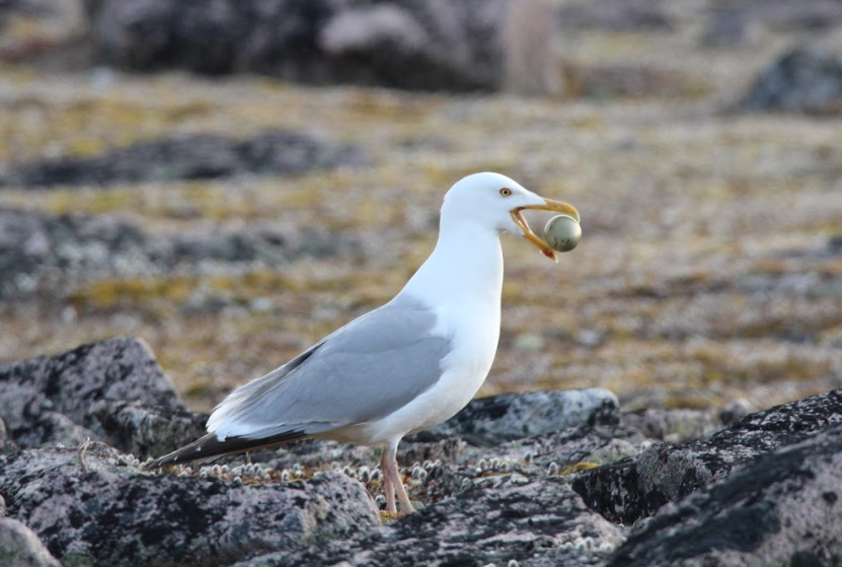
Using camera traps, I also examined the activity of secondary predators like gulls and ravens, during bear visits to nesting bird colonies. We found a significant increase in the presence of these secondary predators coincident with bear activity, suggesting that bears indirectly elevate nest predation risk by attracting opportunistic species to disturbed colonies. This work, conducted in collaboration with partners at the University of North Dakota and the University of Windsor, highlights the broader community-level consequences of large mammal predators beyond their direct interactions with prey.