Integrated Camera Networks
Remote trail cameras are powerful tools to answer ecological questions at landscape scales. But the real power of these tools has emerged in recent years with increasing calls for collaboration between researchers, and integrating study designs into networks. By working together and aligning resources, we can truly start to analyze “big data” and answer questions at the heart of landscape ecology.
Landscape Context Drives Relationships
When I first started as a postdoctoral fellow at the University of Victoria in 2022, one of my first projects was to bring together nine different research projects worth of data into a single cohesive analysis of habitat alteration on eleven boreal mammal species. The biggest challenge in this was simply getting all the data together into a similar framework, ready for analysis!
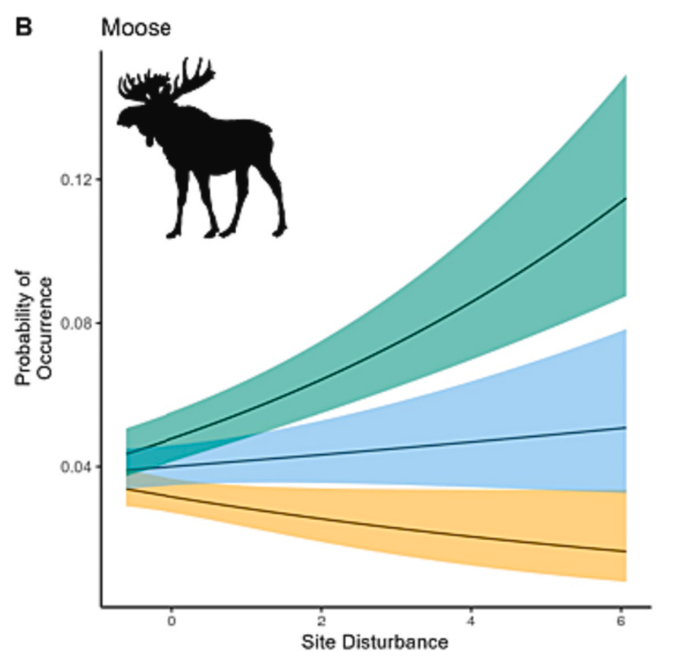
The findings of this work show that for some species their relationship with habitat alteration depends on the landscape context in which the alteration exists! This implies conservation actions need to consider local conditions rather than broad sweeping mandates.
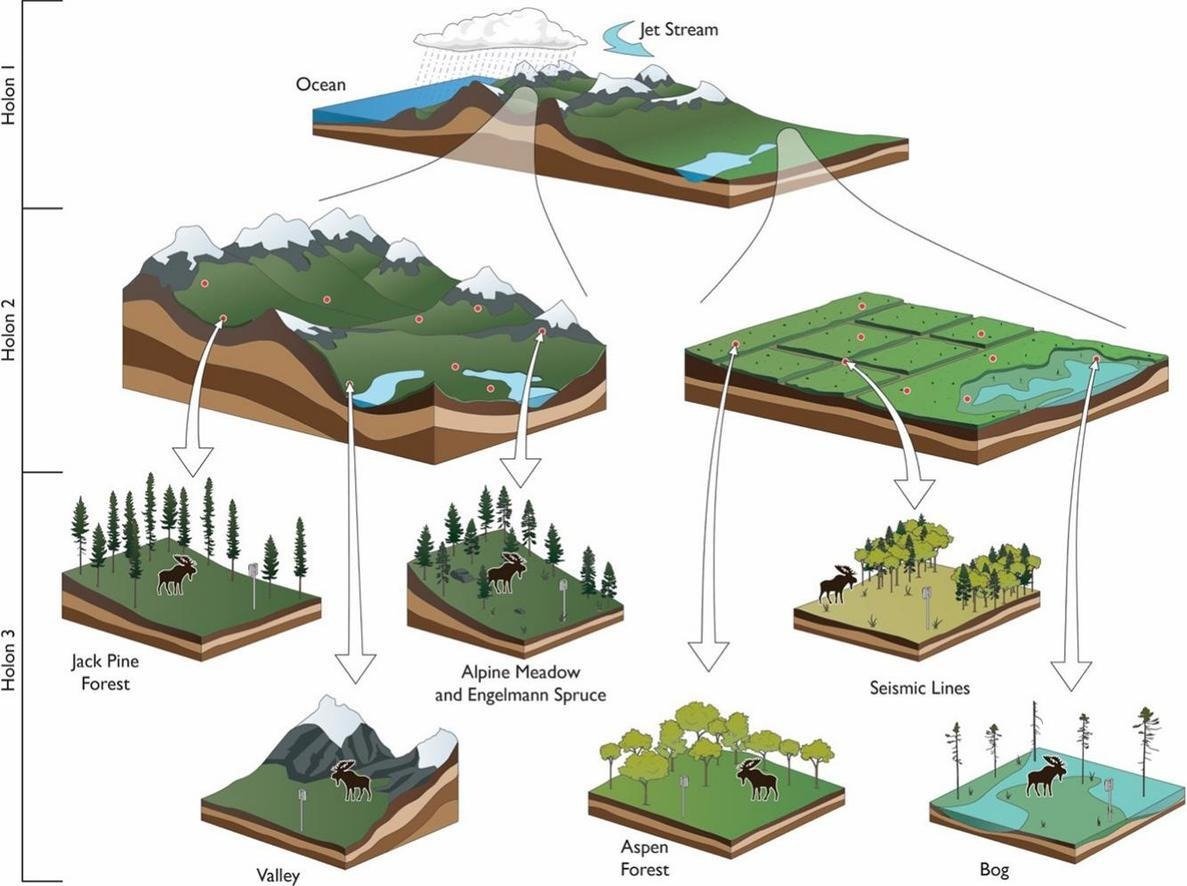
As a fun note, this project has largely driven my ecosystem level thinking, considering units of study as “holons” when thinking about landscape ecology. This is on-going work, so if you are interested in contributing data, or tackling large-scale questions please reach out!